
Home / Truck Beds / Truck Flatbeds
TRUCK FLATBEDS
Truck Flatbeds & Flatbed Truck Beds for Pickups in Clarinda, IA
Replace your factory pickup box with a work-ready truck flatbed built for towing, hauling, farm work, construction, and everyday jobsite use. At Highway 71 Trailer Superstore in Clarinda, Iowa, shoppers can compare flatbed truck beds from trusted brands like Aluma, H&H Trailers, and Sure-Trac so they can choose the right setup for their truck, work, and towing needs.
Whether you are looking for a lightweight aluminum flatbed, a rugged steel truck bed, a skirted bed with storage, or a gooseneck-ready flatbed for your pickup, Highway 71 Trailer Superstore can help you narrow down the right fit. Bring your truck year, make, model, wheel setup, and towing goals, and the team can help you compare options for Ford, Ram, Chevy, and GMC pickups.

SECTION 01
Find the Right Flatbed Truck Bed for Your Pickup
A truck flatbed is one of the most practical upgrades you can make to a pickup when the factory bed no longer matches the way you work. Instead of reaching over tall bed sides, fighting for gooseneck clearance, or trying to fit oversized materials into a boxed bed, a flatbed truck bed gives you a more open work surface with easier side access, stronger tie-down flexibility, and more room for irregular cargo.
For farmers, ranchers, contractors, acreage owners, hotshot users, and fleet operators, the right pickup flatbed can make a truck more useful every day. The key is choosing the right material, brand, bed style, storage setup, hitch configuration, and fitment for your specific truck.

SECTION 02
What Is a Truck Flatbed?
A truck flatbed is a replacement bed or truck body installed on a pickup or work truck after the factory pickup box is removed. It creates a flat, open deck that is easier to load from the sides and better suited for equipment, pallets, hay, tanks, pipe, lumber, fencing supplies, and gooseneck trailers.
This page is about flatbed truck beds, not complete commercial flatbed trucks. It is also different from a flatbed trailer. If you already own a pickup and want to turn it into a more capable work truck, you are looking for a truck flatbed, pickup flatbed, truck bed replacement, or flatbed truck bed.

SECTION 03
Who Uses Pickup Truck Flatbeds?
Pickup truck flatbeds are popular with buyers who need their truck to work harder than a standard pickup box allows. They are especially useful for people who regularly tow, haul, load from the sides, or carry equipment that does not fit well inside a regular pickup bed.
Common users include farmers, ranchers, contractors, fence crews, landscapers, acreage owners, equipment operators, municipal crews, horse and livestock owners, and heavy-duty pickup owners who need better gooseneck access. A flatbed can also be a good upgrade for older work trucks where the factory bed is damaged, rusted, or no longer useful.

SECTION 04
Common Trucks That Get Flatbeds
Most flatbed truck bed shoppers are working with heavy-duty pickups, although fitment depends on the exact bed and truck. Common searches include Ford F-250 flatbed, Ford F-350 flatbed, Ram 2500 flatbed, Ram 3500 flatbed, Chevy Silverado 2500HD flatbed, Chevy Silverado 3500HD flatbed, GMC Sierra 2500HD flatbed, and GMC Sierra 3500HD flatbed.
Fitment can vary between single rear wheel and dually trucks, pickup frames and cab-and-chassis trucks, short beds and long beds, and different model years. Before ordering, confirm your truck year, make, model, wheelbase, frame type, fuel fill location, DEF access, wiring needs, and towing setup.

SECTION 05
Aluminum vs. Steel Truck Flatbeds
One of the biggest decisions when shopping for truck flatbeds is whether to choose aluminum or steel. Both materials can be excellent choices, but they serve different priorities. Aluminum truck beds are often chosen for lower weight, corrosion resistance, and a clean appearance, while steel truck beds are often chosen for rugged work use, heavy-duty value, and jobsite toughness.
For Iowa truck owners, this comparison matters. Farm trucks, ranch trucks, road salt, gravel roads, mud, manure, equipment hauling, and winter use can all affect how a flatbed performs over time. The best choice depends on how you use the truck, what you tow, how much storage you need, and whether weight savings or steel durability matters more for your application.

Why Choose an Aluminum Truck Bed?
Aluminum truck beds are a strong option for buyers who want a lighter flatbed with good corrosion resistance and lower maintenance concerns. An aluminum truck flatbed can be especially appealing for daily drivers, farm pickups, acreage trucks, and work trucks that spend time in wet, salty, or muddy conditions.
Aluma is a strong fit for shoppers looking specifically for aluminum truck beds. Aluma’s truck bed lineup includes lightweight aluminum flatbeds for pickup trucks, with multiple series and size options available. For buyers comparing aluminum flatbed truck beds, Aluma should be one of the main brands to review.
Why Choose a Steel Truck Bed?
Steel truck beds are a strong fit for heavy work use, rough jobsites, towing-heavy applications, and buyers who want a rugged work bed with a familiar feel. Steel can be a practical choice for contractors, farmers, ranchers, and fleet users who need a bed that can handle repeated abuse from tools, chains, equipment, pallets, hay, and materials.
H&H and Sure-Trac are good brand options for shoppers interested in steel truck beds. Their truck bed lineups include work-focused features such as gooseneck options, receiver tubes, formed channel structures, stake pockets, rub rails, lighting, and skirted toolbox configurations depending on model.
Which Material Should You Choose?
Choose aluminum if weight savings, corrosion resistance, and lower maintenance are top priorities. Choose steel if rugged work use, heavy-duty structure, and traditional jobsite toughness are more important. For many buyers, the decision comes down to how the truck is used most often.
A farm truck that sees road salt, mud, and daily chores may benefit from aluminum. A contractor truck that carries tools, chains, equipment, and heavy materials may benefit from steel. A towing-focused truck may need either material, but hitch setup, truck ratings, installation quality, and clearance should be reviewed carefully before buying.
SECTION 06
Aluma Aluminum Truck Beds
Aluma truck beds are a strong option for pickup owners who want a lightweight aluminum flatbed with practical work features. Aluminum is especially popular with buyers who want a clean-looking flatbed that resists corrosion better than traditional steel and can help reduce unnecessary bed weight.
For Highway 71 Trailer Superstore shoppers, Aluma is the aluminum-focused truck bed brand to compare. Aluma’s lineup includes multiple truck bed series, including options with different bed sizes and weights, making it useful for buyers who want to match the bed to their specific pickup and workload.

Best Uses for Aluma Truck Beds
Aluma truck beds are a good fit for pickup owners who want an open, practical flatbed for light commercial use, farm and acreage work, towing support, weekend hauling, or general utility. They can be especially appealing for drivers who want side-loading access and a more usable deck without choosing a heavy steel bed.
Aluminum flatbeds are often considered by buyers who haul tools, small equipment, fencing supplies, feed, seed, fuel tanks, landscape materials, and recreational gear. They are also worth considering for trucks that see winter roads, moisture, or regular outdoor exposure.
Aluma Truck Bed Features to Highlight
Depending on the model, Aluma truck beds may include features such as aluminum flooring, headache rack lighting, rub rails, stake pockets, LED lighting, pre-wiring, rear skirts, and bracket provisions. Exact features vary by series and model, so confirm details with Highway 71 Trailer Superstore before quoting a specific bed.
Looking for a lightweight aluminum flatbed?
Ask Highway 71 Trailer Superstore about current Aluma truck bed options for your pickup. Bring your truck year, make, model, bed length, wheel setup, and towing needs so the team can help you compare available sizes and fitment.
SECTION 07
H&H Truck Beds
H&H truck beds are built for pickup owners who want a dependable work bed with straightforward features and strong towing utility. H&H offers truck beds for 2000 model year or newer Ford, GM, and RAM trucks, with bed lengths listed from 84" to 112" and hitch ratings listed at 30K GN / 20K BP depending on setup.
For shoppers comparing steel truck flatbeds, H&H gives Highway 71 customers several useful choices: open flatbeds, skirted truck beds with tool storage, recessed gooseneck models, and turnover-style options. These configurations make H&H a strong option for farmers, contractors, ranchers, fleet users, and towing-heavy pickup owners.

H&H Flatbed Recessed
The H&H Flatbed Recessed model is a strong choice for buyers who want a straightforward open-deck steel truck bed with gooseneck capability. It is well suited for farm trucks, ranch trucks, general hauling, equipment trailers, hay trailers, livestock trailers, and work trucks that need easy side access.
This style is best for buyers who want the utility of a flatbed without built-in skirted storage. It keeps the bed simpler, open, and easy to access from multiple angles.
H&H Skirted Recessed
The H&H Skirted Recessed model adds built-in storage to the work-truck flatbed format. Skirted beds are especially useful for contractors, farmers, fleet users, and service-style trucks that need lockable space for chains, straps, binders, gloves, tools, PPE, and jobsite supplies.
Choose a skirted truck bed if you regularly wish your pickup had secure storage built into the bed. It can help keep gear organized and reduce the need to keep everything loose in the cab, behind the seat, or in separate toolboxes.
H&H Flatbed Turnover and Skirted Turnover
Turnover-style truck beds are designed for buyers who want more flexibility from the gooseneck area. A turnover setup can be useful when you tow often but still want a cleaner, flatter deck when the hitch is not in use.
For towing-heavy users who also need lockable storage, the skirted turnover configuration is often the best place to start. For buyers who want a simpler open bed with towing flexibility, the non-skirted turnover style may be a better fit.
SECTION 08
Sure-Trac Steel Truck Beds
Sure-Trac truck beds are another strong steel flatbed option for Highway 71 Trailer Superstore customers. Sure-Trac lists four primary truck bed styles: Flatbed Recessed, Skirted Recessed, Flatbed Turnover, and Skirted Turnover. These models are built around real-world work use, towing capability, storage options, and practical truck compatibility.
Sure-Trac truck beds are listed for 2000 model year or newer Ford, GM, and RAM trucks, with bed lengths from 84" to 112", 84" and 97" width options, and hitch ratings listed at 30K GN / 20K BP. Final towing capacity still depends on the truck, hitch setup, installation, axle ratings, tires, GCWR, GVWR, and trailer.

Sure-Trac Flatbed Recessed
The Sure-Trac Flatbed Recessed model is a good fit for pickup owners who want an open steel flatbed with a recessed gooseneck setup. It is designed for work use, general hauling, and towing applications where an open deck is more important than built-in storage.
This model is especially practical for farm, ranch, and equipment use where side access, tie-down options, and gooseneck capability matter every week.
Sure-Trac Skirted Recessed
The Sure-Trac Skirted Recessed model adds integrated skirted storage to the recessed gooseneck format. This makes it a strong choice for buyers who need to carry tools, chains, binders, straps, gloves, farm supplies, repair gear, or jobsite equipment.
If you use your truck as a mobile work platform, a skirted truck bed can be one of the most useful upgrades. It keeps everyday tools closer to the work while helping reduce clutter in the cab.
Sure-Trac Flatbed Turnover
The Sure-Trac Flatbed Turnover model is designed for buyers who want gooseneck capability with a turnover-style hitch setup. This can be useful for truck owners who switch between towing and flat-deck hauling and want more flexibility from the bed surface.
This style is worth comparing if you tow gooseneck trailers regularly but also haul pallets, materials, or equipment that benefit from a flatter deck area.
Sure-Trac Skirted Turnover
The Sure-Trac Skirted Turnover model combines turnover hitch functionality with built-in storage. It is a strong option for towing-heavy buyers who also need organized, lockable space for work gear.
For contractors, farmers, and ranchers who use one truck for both towing and daily work, this configuration can offer a practical blend of hitch access, storage, lighting, and flatbed utility.
SECTION 09
Skirted vs. Non-Skirted Truck Flatbeds
After material and brand, one of the most important choices is whether to buy a skirted or non-skirted flatbed. Both styles can be excellent, but they solve different problems.
A non-skirted flatbed gives you a simpler open-deck setup with easier side access and fewer built-in compartments. A skirted flatbed adds storage boxes below the deck line, creating a more finished look and giving you secure places to store gear.
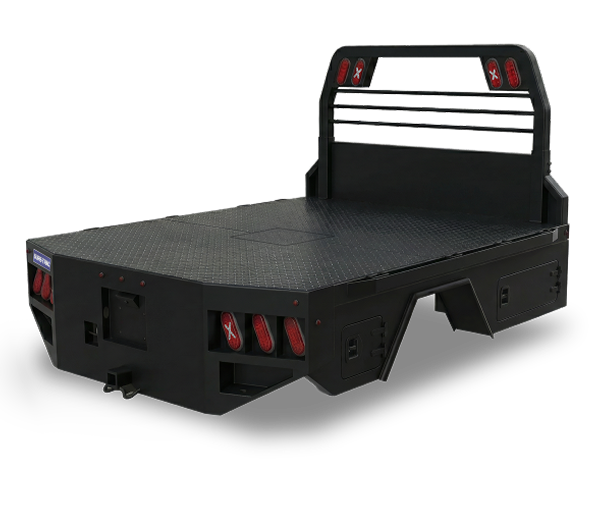
Skirted Flatbeds
A skirted flatbed is usually the better choice if storage is one of your main frustrations with a regular pickup bed. Built-in boxes can be used for chains, binders, straps, tools, gloves, PPE, hitches, tow straps, fencing supplies, farm parts, and jobsite gear.
Skirted truck beds are especially helpful for contractors, service trucks, fleet users, and farmers who carry the same tools every day. They also create a more finished appearance, which some buyers prefer on newer trucks.
Non-Skirted Flatbeds
A non-skirted flatbed is usually the better choice if you want simplicity, open access, and flexibility. These beds are popular with farm, ranch, and general hauling users because they keep the sides more open and make it easier to reach cargo from multiple directions.
Non-skirted beds may also be preferred by buyers who plan to add custom boxes, tanks, compressors, welding equipment, or other accessories later. They can be a good fit when you know you need a flat work surface but are not sure what storage layout you want yet.
Storage Questions to Ask Before Buying
Before choosing a skirted or non-skirted truck flatbed, think through what you carry every week. Where will you put chains and binders? Do you need lockable tool storage? Will you carry fuel tanks, compressors, welders, or repair gear? Do you need side clearance for rough farm lanes, jobsite entrances, or uneven ground?
The right answer is not always the bed with the most boxes. It is the bed that keeps your truck useful without getting in the way of how you load, tow, and work.
SECTION 10
Built for Towing: Gooseneck, Fifth Wheel, and Receiver Hitch Options
Many pickup owners switch to a flatbed because they tow often. A flatbed can make gooseneck access easier, improve visibility around the hitch area, and create a more practical work surface when you are not towing.
That said, towing should always be reviewed carefully. A truck bed’s hitch rating is not the same thing as your truck’s towing capacity. Your truck’s GVWR, GCWR, axle ratings, tires, hitch components, trailer weight, pin weight, and installation all matter.
Gooseneck Towing
Gooseneck flatbed truck beds are popular with farmers, ranchers, livestock owners, hotshot users, and equipment operators. They can be used with horse trailers, livestock trailers, equipment trailers, flatbed gooseneck trailers, hay trailers, dump trailers, and other heavy-duty towing setups.
If gooseneck towing is your main reason for upgrading, talk through your current trailer, loaded weight, hitch type, clearance needs, and towing frequency before selecting a bed.
Fifth-Wheel Considerations
Some turnover-style truck beds may support fifth-wheel companion setups, depending on the model and hitch configuration. This must be verified before purchase. Not every flatbed, hitch, or trailer combination will work the same way.
Before towing a fifth-wheel-style trailer with a flatbed pickup, confirm hitch compatibility, trailer clearance, pin box clearance, bed height, turning clearance, truck ratings, and installation details.
Receiver Hitch Use
Many truck flatbeds also include or support receiver hitch use for bumper-pull trailers. This matters if you pull utility trailers, landscape trailers, equipment trailers, dump trailers, car haulers, or small livestock trailers.
Ask Highway 71 Trailer Superstore to help confirm receiver setup, trailer plug placement, safety chain access, and wiring before finalizing your truck bed choice.
SECTION 11
Flatbed Fitment for Ford, Ram, Chevy, and GMC Pickups
Fitment is one of the most important parts of buying a truck flatbed. Two trucks may look similar but require different considerations because of model year, frame type, axle setup, cab configuration, bed length, fuel fill location, DEF access, wiring, camera systems, and hitch needs.
Before ordering any flatbed truck bed, have your truck information ready. At minimum, you should know the year, make, model, bed length, single rear wheel or dually setup, cab configuration, and whether the truck is a pickup frame or cab-and-chassis.

Ford Truck Flatbeds
Ford Super Duty pickups are common candidates for truck flatbeds, especially F-250, F-350, and F-450 trucks used for farm, ranch, construction, and towing work. Buyers should pay close attention to backup camera relocation, 360-view camera systems, tail light wiring, fuel fill placement, and gooseneck clearance.
A Ford truck flatbed can be a great upgrade when you need better access to trailers, easier side loading, or a more durable work platform than the factory bed.
Ram Truck Flatbeds
Ram 2500, Ram 3500, and Ram 4500 trucks are also common flatbed candidates. Ram buyers should confirm single rear wheel or dually fitment, cab-and-chassis differences, DEF and fuel fill access, trailer wiring, and hitch setup.
If the truck is used for livestock, hotshot, farm, or equipment towing, make sure the bed and hitch layout are matched to your trailer style and loaded weight.
Chevy and GMC Truck Flatbeds
Chevy Silverado 2500HD, Chevy Silverado 3500HD, GMC Sierra 2500HD, and GMC Sierra 3500HD pickups are popular options for flatbed truck bed conversions. As with Ford and Ram trucks, fitment depends on more than just the badge on the grille.
Confirm model year, frame, wheelbase, bed length, camera package, tail light wiring, fuel access, and hitch requirements before choosing a bed.
SECTION 12
Truck Flatbed Installation: Cameras, Sensors, Lights, and Wiring
A good truck flatbed purchase is not just about the bed itself. Installation planning matters. Modern pickups often include backup cameras, parking sensors, trailer plugs, bed lights, tailgate wiring, 360-view systems, blind spot features, and other electronics that may be affected when the factory bed is removed.
That does not mean you cannot install a flatbed on a newer truck. It means the details should be discussed before ordering so you know what can be retained, relocated, modified, or replaced.

Will I Lose My Backup Camera?
Not necessarily. Backup camera retention depends on the truck, camera location, bed design, wiring, and installation approach. Some cameras can be relocated, while more complex camera systems may need additional planning.
If your truck has a 360-view system, parking sensors, blind spot monitoring, trailer camera features, or factory bed wiring, mention that early in the quote process. These systems should be considered before choosing the bed and installation plan.
Lighting and Wiring Questions
Truck flatbeds may include or require tail lights, reverse lights, marker lights, license plate lights, strobes, work lights, headache rack lighting, trailer plugs, and wiring connections. The details vary by brand and model.
Before buying, ask:
- Will my trailer plug still work?
- Can my backup camera be retained?
- Will lights trigger dash warnings?
- Can work lights or strobes be added?
- Where will the 7-way plug be located?
- How will fuel and DEF access be handled?
- Will the headache rack support accessories?
What to Bring When Requesting a Quote
To get the most accurate flatbed quote, bring or send:
- Truck year, make, and model
- Single rear wheel or dually
- Pickup bed or cab-and-chassis
- Current bed length
- Cab configuration
- Primary towing use
- Gooseneck, fifth-wheel, or bumper-pull needs
- Backup camera and sensor package
- Toolbox and storage needs
- Any auxiliary tank, compressor, welder, or special accessory plans
- ZIP code and preferred timeline
SECTION 13
Flatbed vs. Regular Pickup Bed
A truck flatbed is not the right choice for every pickup owner, and that is okay. The best page should help buyers choose correctly, not push every shopper into the same product.
A flatbed is usually best when your truck is a tool. A regular pickup bed is usually best when your truck is mostly a daily driver that carries small loose cargo, groceries, luggage, sports gear, or personal items.

Advantages of a Truck Flatbed
A truck flatbed gives you easier side loading, better gooseneck access, more tie-down options, and a more open work surface. It is better for pallets, hay, tanks, equipment, pipe, lumber, fencing supplies, and oversized cargo that does not fit neatly inside a standard pickup bed.
Flatbeds can also make an older truck more useful. If the factory bed is rusted, damaged, or limiting your work, replacing it with a flatbed can extend the usefulness of the truck.
Trade-Offs to Consider
A flatbed also has trade-offs. Cargo must be tied down. Loose items are not contained the way they are in a regular pickup box. Bed height may change. Bed weight may affect payload. Camera and wiring relocation may be needed. Weather exposure is greater unless you add boxes or covers.
Resale can also depend on the buyer. A flatbed may make the truck more valuable to a farmer, contractor, or towing user, but less appealing to a casual retail buyer who wants a standard pickup bed.
Who Should Keep a Regular Pickup Bed?
A regular pickup bed may be better if you mostly use your truck for daily driving, personal errands, small unsecured cargo, occasional home improvement trips, or general transportation. If you rarely tow, rarely load from the side, and prefer enclosed bed storage, a flatbed may be more truck bed than you need.
SECTION 14
Is a Flatbed Worth It on a Pickup?
A flatbed is worth it on a pickup if you regularly tow gooseneck trailers, haul oversized cargo, need side-loading access, or want a more practical work-truck setup. A regular pickup bed is usually better for daily driving, loose cargo, and enclosed personal storage.
For farm, ranch, construction, acreage, towing, and fleet use, a truck flatbed can make the pickup more useful every day. The right choice depends on fitment, payload, towing setup, material, storage, camera and wiring needs, and installation quality.

Worth it for:
- Farm and ranch work
- Gooseneck towing
- Contractor and fleet use
- Equipment and material hauling
- Side-loading access
- Tool storage with skirted beds
- Replacing a damaged factory pickup bed
Less ideal for:
- Casual daily driving
- Small loose cargo
- Drivers who want enclosed pickup bed storage
- Buyers concerned about broad retail resale
- Trucks that are not rated for the intended load or trailer
GET STARTED
Ready to Choose Your Truck Bed?
Find Your Configuration
Not sure which flatbed setup fits — recessed or turnover, skirted or open? We can help you compare based on your truck, towing, storage, and workload.
Bring Us Your Details
Get a better recommendation in less time. Send us your truck year, make, model, bed length, and how you plan to use it — we'll narrow down compatible options.
Visit Highway 71 Trailer Superstore
Shop truck flatbeds in Clarinda, IA. Visit us to review aluminum and steel options, ask fitment questions, and compare configurations before you buy.
FAQ
Frequently Asked Questions About Truck Flatbeds
What is the difference between a truck flatbed and a flatbed truck?
A truck flatbed is the bed or body installed on a pickup or work truck. A flatbed truck usually refers to a complete commercial truck. This page is about flatbed truck beds for pickups, not complete commercial flatbed trucks.
Can I put a flatbed on my pickup truck?
In many cases, yes. Fitment depends on your truck’s year, make, model, frame, wheelbase, bed length, single rear wheel or dually setup, and whether it is a pickup or cab-and-chassis truck.
Should I choose an aluminum or steel truck flatbed?
Choose aluminum if lower weight, corrosion resistance, and lower maintenance are top priorities. Choose steel if rugged work use, jobsite durability, and heavy-duty value are more important. Highway 71 Trailer Superstore can help you compare Aluma aluminum truck beds with H&H and Sure-Trac steel truck beds.
Are Aluma truck beds aluminum?
Yes. Aluma offers lightweight aluminum truck beds and flatbeds for pickup trucks. Confirm current model availability, size, and fitment with Highway 71 Trailer Superstore before purchasing.
What H&H truck bed styles are available?
H&H offers truck bed styles such as flatbed recessed, skirted recessed, flatbed turnover, and skirted turnover models. Availability may vary, so ask Highway 71 Trailer Superstore which H&H truck beds are currently in stock or available to order.
What Sure-Trac truck bed styles are available?
Sure-Trac offers truck bed styles including Flatbed Recessed, Skirted Recessed, Flatbed Turnover, and Skirted Turnover models. These options give buyers choices between open deck, skirted storage, recessed gooseneck, and turnover-style configurations.
Do truck flatbeds work with gooseneck trailers?
Many truck flatbeds are designed with gooseneck towing in mind. Hitch setup varies by brand and model, and your truck’s total towing capacity still depends on truck ratings, axle ratings, tires, hitch components, installation, and trailer weight.
Can I tow a fifth-wheel trailer with a flatbed?
It depends on the flatbed model, hitch setup, trailer, and truck. Some turnover-style beds may support compatible fifth-wheel companion setups, but clearance and rating details should be confirmed before towing.
Will I lose my backup camera when installing a flatbed?
Not necessarily. Backup camera retention depends on the truck and installation approach. Newer trucks with 360-view cameras, parking sensors, and advanced wiring should be discussed before ordering a truck bed.
Should I choose a skirted or non-skirted flatbed?
Choose a skirted flatbed if you want built-in lockable storage. Choose a non-skirted flatbed if you prefer a simpler open deck, easier side access, or plan to add custom boxes and accessories later.
Does Highway 71 Trailer Superstore install truck flatbeds?
Ask Highway 71 Trailer Superstore about current truck bed availability and installation options. Installation services, scheduling, and fitment support should be confirmed directly with the dealership before purchase.